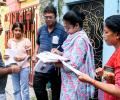
Delhi's Chief Electoral Officer, Ashok Kumar, announced the reverification of over 47 lakh voters whose names were removed from draft electoral rolls. This initiative addresses complaints of eligible voters being omitted and aims to ensure no genuine voter is left out before the final lists are published on December 4. Booth-level officers are resolving discrepancies and voters can fill Form 6 for inclusion.
The Election Commission has informed the Supreme Court that over 37 lakh appeals concerning deletions or inclusions in West Bengal's electoral rolls remain pending under the Special Intensive Revision. The apex court-appointed tribunals have disposed of only a fraction of the 38.20 lakh appeals filed, prompting the Supreme Court to seek data and a plan for streamlining the adjudication process.
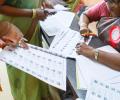
The Supreme Court will hear a plea on October 28 regarding the Special Intensive Revision (SIR) of Delhi's electoral roll. Petitioners seek transparency from the Election Commission on voter deletion reasons and a simplified re-inclusion process for those omitted, especially concerning Form 6. The court had previously raised concerns about "mechanical" notice issuance during the SIR, which led to 47 lakh voter deletions in Delhi.
Delhi's draft electoral roll has been published, showing 47.7 lakh voters excluded. Those omitted can file claims until September 30, with the final roll due on November 4. The exclusion follows a Special Intensive Revision exercise where many electors were categorised as "uncollectable."

Delhi's draft electoral rolls show a significant reduction in voters, with affluent constituencies experiencing a higher percentage drop (37.4%) compared to areas with unauthorised colonies and Jhuggi-Jhopdi clusters (35.7%). Overall, 47.5 lakh voters have been excluded, with officials noting Delhi's exclusion rate is the highest among states undertaking Special Intensive Revision. Citizens have until September 30 to file claims and objections before the final roll is published on November 4.

Sourav Ganguly and Harbhajan Singh were confirmed as the representatives of the Full Members of the BCCI.

The Delhi poll body has issued notices to several prominent voters, including Chief Minister Rekha Gupta and AAP supremo Arvind Kejriwal, for discrepancies in their enumeration forms during the ongoing Special Intensive Revision (SIR) exercise. While Gupta's entry has been validated, millions of other voters, including other political figures, have received notices for issues like age-related mismatches or being unmapped with previous SIR records, requiring them to submit documents by October 29.
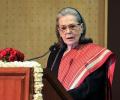
A Delhi court has sought responses from Sonia Gandhi and the police on a plea challenging a magistrate's order refusing a probe into allegations that she was included in electoral rolls before acquiring Indian citizenship.
Former RBI Governor Bimal Jalan, ex-IAF Chief NAK Browne, and other prominent figures in Delhi have received notices regarding discrepancies in their voter details during the ongoing Special Summary Revision (SIR) of the electoral rolls. Over 33 lakh electors have been identified for such notices, with a deadline of September 30 for responses.

A panel of retired Supreme Court and High Court judges, part of an Independent Commission on Special Intensive Revision (SIR), held a public hearing on Thursday to address widespread deletions from India's electoral rolls. Testimonies from affected citizens, including a former MP and a Delhi resident declared deceased by the Election Commission, highlighted significant issues. The SIR process, initiated in 2025, has led to the removal of approximately 13 crore voters nationwide, with substantial deletions reported in Delhi and Uttar Pradesh.

The Delhi Chief Electoral Officer's office has issued notices to over 33 lakh voters, including former deputy prime minister LK Advani, External Affairs Minister S Jaishankar, and former vice-president Jagdeep Dhankhar, over discrepancies in their electoral roll details. These notices are part of the Special Intensive Revision (SIR) exercise, primarily due to details not matching with the 2002 SIR. Despite concerns raised by some politicians, officials assure that no names will be deleted without due verification and an opportunity for voters to respond.

A political controversy has erupted over the inclusion of BJP Rajya Sabha MP Raghav Chadha's name in Delhi's electoral rolls. The Aam Aadmi Party (AAP) has alleged procedural irregularities, questioning how his name appeared in the Rajinder Nagar constituency's voter list despite the draft rolls showing fewer entries. Poll officials confirm Chadha's name was added through the updation process after being removed from Punjab's rolls, while Chadha dismisses AAP's claims as a 'bitter ex' reaction.

A report by 'Voter Adhikar Manch' has revealed that the number of excluded electors in Delhi's draft electoral roll under the Special Intensive Revision (SIR) exceeded the winning margin in 68 of 70 Assembly constituencies in the 2025 polls. The audit found over 47 lakh electors marked as absent, shifted, dead, or duplicate, raising serious questions about the integrity of the electoral process and the accuracy of voter lists.

The Supreme Court is set to hear a plea filed by Congress leader Rahul Gandhi and other opposition figures on Thursday regarding alleged large-scale voter deletions and irregularities in the Special Intensive Revision of electoral rolls. The petition seeks an independent audit of these deletions and modifications, and a direction to prevent further deletions without due process.

The Supreme Court has expressed concern to the Election Commission regarding the "almost mechanical" issuance of notices under the Special Intensive Revision (SIR) exercise in Delhi, urging additional safeguards and clarification on "logical discrepancy" criteria. The court is hearing a petition challenging the EC's process, which has seen millions of voters receive notices, raising practical difficulties and concerns about potential disenfranchisement.
The Election Commission of India has told the Delhi high court that two voters, whose names were deleted from the electoral rolls after they could not complete the enumeration process during the Special Intensive Revision in the national capital, can fill Form 6 for redressal of their grievance.

Delhi Police have registered 20 FIRs and made arrests following Saturday's Cockroach Janta Party (CJP) protest against Chief Election Commissioner Gyanesh Kumar. The protest, which saw over 7,000 detentions and left more than 15 police personnel injured, was held over alleged irregularities in electoral roll revisions.

Thousands of protesters, including farmers, trade unionists, students, and Left party members, marched towards the Election Commission of India headquarters in Delhi, demanding the resignation of Chief Election Commissioner Gyanesh Kumar and the withdrawal of the ongoing Special Intensive Revision (SIR) of electoral rolls, alleging 'vote chori' and exclusion of eligible citizens.

Rahul Gandhi's trip abroad occurred amid protests in New Delhi concerning CEC Gyanesh Kumar and electoral rolls.
A Delhi court has revived a legal challenge concerning Congress leader Sonia Gandhi's electoral roll inclusion, quashing a magistrate's previous order and mandating a fresh, reasoned hearing on allegations of pre-citizenship voter registration.

Several prominent INDIA bloc leaders, including Arvind Kejriwal and Mamata Banerjee, were detained by Delhi Police on Saturday while attempting to protest at Jantar Mantar. They were demanding the resignation of Chief Election Commissioner Gyanesh Kumar over alleged irregularities in electoral rolls, with leaders condemning the detentions as an attack on democracy.

The Railway Board cancelled certain Mail and Express trains arriving at New Delhi and Hazrat Nizamuddin stations on October 10 due to expected road traffic from a planned protest. The Cockroach Janata Party announced a protest at Jantar Mantar on Saturday, demanding the resignation of Chief Election Commissioner Gyanesh Kumar over alleged irregularities in electoral rolls. Delhi police requested the closure of 57 metro stations to prevent protesters from reaching the site.

CJP founder Abhijeet Dipke, YouTuber Dhruv Rathee, and actor-activist Prakash Raj joined a protest in Bengaluru, demanding the scrapping of the electoral roll revision exercise and the resignation of Chief Election Commissioner Gyanesh Kumar, alleging widespread voter deletion aimed at disenfranchising specific groups.

Delhi Police have registered three FIRs and detained nearly 1,000 individuals, including prominent political leaders and activists, following protests at Jantar Mantar demanding the resignation of Chief Election Commissioner Gyanesh Kumar. The protests, which violated prohibitory orders, were in response to allegations concerning the Special Intensive Revision of electoral rolls.

Former Tamil Nadu BJP president K Annamalai has strongly criticised the Delhi Police for its recent actions against members of the Cockroach Janta Party (CJP), calling it a "real disservice." Annamalai defended CJP's democratic right to raise critical questions, particularly regarding electoral roll revisions, and warned that heavy-handed police measures would only strengthen the critics. He emphasised that the government should address the substantive public queries instead of resorting to arrests.

Four members of the Hindu Raksha Dal were arrested in Delhi for allegedly assaulting students and women during a protest on October 10. The arrests came after a video of the incident went viral, prompting police to take suo motu cognisance despite no formal complaint. The incident occurred amidst broader protests and detentions.

Delhi Police has denied permission for a protest at Jantar Mantar against Chief Election Commissioner Gyanesh Kumar, leading to the closure of 11 metro stations and heightened security. Various political parties and student unions are demanding Kumar's resignation over alleged irregularities in electoral rolls and the Special Intensive Revision (SIR) exercise.
The Election Commission has extended the schedule for the Special Intensive Revision (SIR) of electoral rolls in Delhi, Punjab, Telangana, and Karnataka, along with Haryana and Andhra Pradesh. This revision involves house-to-house visits by Booth Level Officers and changes to draft and final roll publication dates, impacting the voter registration process across multiple states.

Three leaders of the Cockroach Janta Party (CJP), Abhijeet Dipke, Saurav Das, and Ashutosh Ranka, were detained by Delhi Police upon landing in the national capital from Mumbai, preventing their planned protest at Jantar Mantar against Chief Election Commissioner Gyanesh Kumar.

Major opposition leaders, including Rahul Gandhi and Mallikarjun Kharge, have filed a petition in the Supreme Court challenging alleged large-scale voter deletions and irregularities in the Special Intensive Revision (SIR) of electoral rolls. This action follows a "March for Democracy" and a declined request to meet the Chief Justice of India regarding "vote chori" allegations.

The DMK has launched a strong attack on Congress leader Rahul Gandhi, questioning his silence on alleged voter deletions in Tamil Nadu and accusing him of inconsistency regarding electoral roll revisions. This comes amidst a broader campaign by the INDIA bloc against the Election Commission over the Special Intensive Revision (SIR) process.

Congress president Mallikarjun Kharge has called for the immediate removal of Chief Election Commissioner Gyanesh Kumar and demanded Prime Minister Narendra Modi's resignation, citing alleged irregularities in electoral rolls and the poll process. Kharge outlined five key demands for electoral transparency and pledged that the Congress party would protest both on the streets and in Parliament.

Trinamool Congress chief Mamata Banerjee, AAP national convenor Arvind Kejriwal, and several other opposition leaders were detained by Delhi Police during protests against Chief Election Commissioner Gyanesh Kumar and the Special Intensive Revision (SIR) of electoral rolls.

The Supreme Court has sought responses from the Election Commission and Chief Election Commissioner Gyanesh Kumar regarding a plea filed by Congress leader Rahul Gandhi and 12 other opposition leaders concerning alleged large-scale voter deletions and Special Intensive Revision (SIR) irregularities.

Former civil servants and rights activists have issued a "people's impeachment" notice demanding the resignation of Chief Election Commissioner (CEC) Gyanesh Kumar. They allege six charges against him, including undermining the Election Commission's functioning, mass disenfranchisement through Special Intensive Revision (SIR) of electoral rolls, and compromising political impartiality. The group, including G K Pillai and Najeeb Jung, was prevented from submitting the notice at the EC office.

Citizens in Delhi faced significant restrictions and detentions on Saturday while attempting to protest alleged irregularities in voter rolls. Despite barricades, metro closures, and vehicle diversions, individuals found various ways to reach central Delhi, determined to voice their concerns about the electoral process and fundamental rights.

Padma Shri awardee Harekal Hajabba has received an election notice due to a name mismatch in the electoral rolls. While his official documents identify him as "Harekal Hajabba," the 2002 electoral roll listed him simply as "Hajabba." He is confident the issue will be resolved after presenting his documents to local authorities.
The Supreme Court has agreed to hear an application alleging that Congress leader Rahul Gandhi pushed a pregnant journalist during a march to the apex court on October 12. The matter was mentioned by senior advocate Gaurav Bhatia, who stated the journalist was three months pregnant and required hospitalisation. The court will hear the application on October 26 or October 27, alongside other pleas related to the October 12 march and electoral roll irregularities.

Cockroach Janta Party founder Abhijeet Dipke and other CJP leaders were detained at Delhi's Indira Gandhi international airport ahead of a planned protest at Jantar Mantar.

The UN human rights office expressed concern over mass detentions during protests in Delhi on Saturday, urging India to respect peaceful assembly rights and release detainees. India rejected these concerns as "misplaced" and "unwarranted interference." The protests, organised by the Gen Z-led Cockroach Janta Party (CJP), demanded electoral reforms and the resignation of CEC Gyanesh Kumar over alleged voter list manipulation, which the Election Commission and BJP deny.
